
22 10 2026
Beyond energy: the energy transition as a national opportunity
Chile’s energy transition has showcased our ability to pursue shared long-term goals, build the capabilities needed to achieve them, and adapt to new challenges. Recognizing and projecting these attributes is an opportunity to strengthen our country’s image and open up new avenues for development.
By Macarena Chacc, Head of Corporate Affairs & ESG at oEnergy
Chile’s energy transition has showcased our ability to pursue shared long-term goals, build the capabilities needed to achieve them, and adapt to new challenges. Recognizing and projecting these attributes is an opportunity to strengthen our country’s image and open up new avenues for development.
There are certain familiar themes we turn to when we talk about Chile’s energy transition: our natural advantages for renewable generation, the speed with which we have adopted new technologies, and the profound transformation of our power mix toward a more sustainable one, all in an extraordinarily short period of time.
Yet in a context where the debate about the electricity market tends to focus on the challenges that remain, we rarely stop to take stock of what we have achieved and, above all, of its value in less obvious dimensions.
There is one question I find particularly interesting: what does this process say about Chile, about our capabilities, and about who we are as a country?
I believe that answering it would allow us to recognize strengths that can consolidate our position as an investment destination, strengthen our international reputation, and open up development opportunities. This is not about taking a complacent view or ignoring the difficulties of the process or the challenges facing the power system. Rather, it is about reflecting on a less obvious dimension of the energy transition for Chile: its potential to help build a stronger country image.
During my time at Marca Chile (Chile’s nation brand agency), I learned something valuable about how a country projects itself to the world: reputation cannot be decreed. We can craft narratives and roll out campaigns, but reputation can only be sustained by what a country demonstrates through action.
And our energy transition is full of such evidence.
The capacity to build and sustain shared goals
In Chile, the idea seems to have taken hold that our political differences prevent us from reaching agreements around national goals. The energy transition, however, offers a compelling example of the opposite: our ability to define a long-term vision and sustain it beyond individual governments and their differing strategies.
Since 2015, the National Energy Policy (Política Energética Nacional) has set out a vision to 2050, the result of a participatory process involving the public and private sectors, academia, and civil society. This vision has placed the energy transformation at the heart of the country’s climate commitments, driving measures such as the integration of renewable energy.
Its value lies in having established a shared direction for the country’s energy development without conceiving it as a rigid or unchangeable roadmap. On the contrary, from the outset it included a review mechanism every five years to adapt strategies and priorities without losing sight of long-term objectives. Thus, the policy formulated in 2015, during Michelle Bachelet’s second government, was updated in 2022 under Sebastián Piñera’s second administration, incorporating technological advances, industry transformations, and more ambitious climate targets.
Our ability to build consensus around long-term objectives and sustain them across changes in government is a valuable national attribute, with tangible effects on Chile’s appeal as an investment destination. Continuity in public policy helps build confidence and predictability, key factors for those deciding where to invest.
One example is Climatescope, the ranking developed by BloombergNEF that assesses the attractiveness of markets for clean energy investment, considering, among other factors, existing public policies. Since 2018, Chile has consistently ranked among the ten top-rated emerging markets. Although this position reflects multiple factors, it illustrates how institutional conditions that may seem intangible take on concrete relevance in the international assessment of our country as an investment destination.
We have the talent and capabilities to turn a vision into reality
Defining a shared vision and sustaining it over time is only part of the challenge. The other part is developing the capabilities needed to put it into practice. The 2015 National Energy Policy set a target of 70% renewable electricity generation by 2050. A decade later, in 2025, renewables already accounted for 66% of national generation, bringing us close to that goal almost 25 years ahead of schedule.
Harnessing Chile’s extraordinary natural conditions for renewable generation has required attracting investment, adopting technologies, training professionals, and building companies capable of designing, constructing, and operating complex projects. And this is where a particularly interesting dimension for our country’s image emerges.
For years, Chile has projected itself internationally on the basis of its territory and natural resources. Initiatives such as Chile Creando Futuro and Made by Chileans have sought to broaden that perspective to include the talent, creativity, and capabilities of Chilean people and companies. Our energy transition offers examples of the Chile we want to show the world.
Today, in my role at oEnergy, this reflection holds particular meaning for me. Being part of a Chilean-born company that has grown alongside the energy transition has allowed me to see firsthand how these capabilities are built.
When it began operations in 2013, oEnergy was dedicated exclusively to developing photovoltaic projects. Today, it has more than 279 MWp built, participates in the operation of 95 photovoltaic plants, and has diversified into the development of hybrid projects combining solar generation and storage, as well as standalone battery systems. In this last technology alone, its development pipeline included approximately 2,500 MW in 2025. This evolution reflects how a Chilean company has been able to adopt new technologies, specialize its teams, and expand its capabilities to meet the industry’s changing needs.
This experience goes beyond any single company. An ecosystem of professionals, suppliers, and companies has emerged that combines local know-how with international technologies, financing, and standards: a business fabric that is an asset for tackling challenges and exploring opportunities. Continuing to develop talent is part of the challenge. The Energy Sector Workforce Study (Estudio de Fuerza Laboral del Sector Energía), published in 2025, projects that between 12,000 and 27,000 additional workers will be needed over the next decade.
Chile has been able to transform its natural advantages into knowledge, specialization, and an industry with its own expertise, demonstrating that we have the local talent and capabilities to help address global challenges.
Our ability to anticipate challenges and adapt to new realities
Chile’s energy transition is now in its second half and faces new challenges. High renewable penetration has raised new questions: how to make better use of the energy we produce, how to manage the variability of these sources, and how to give the system greater flexibility and security.
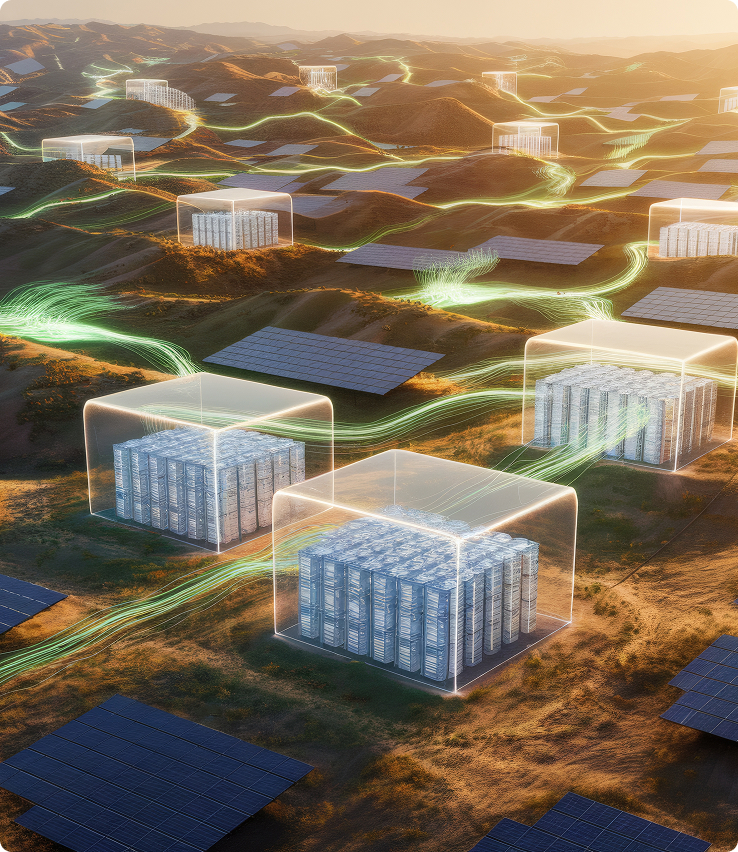
Energy storage illustrates this capacity to adapt. In July 2024, Chile had just 738 MW of storage installed or in the process of commissioning. Less than two years later, it exceeded 4,300 MW in operation and testing, according to data from the National Energy Commission (Comisión Nacional de Energía) and the National Electric Coordinator (Coordinador Eléctrico Nacional). The country increased its energy storage capacity almost sixfold, responding to one of the main challenges of the next stage of its transition.
Significant challenges remain in integrating renewables, particularly in transmission and system operation. But this progress demonstrates our ability to recognize new needs, adopt technological solutions, and mobilize investment in an extraordinarily short time.
And perhaps that is another strength worth highlighting: learning from a transformation already underway and adapting to challenges that were not foreseen. Sustaining a long-term vision also requires adjusting course when circumstances change.
So what does our energy transition say about Chile? That we can build consensus and sustain shared goals beyond our political differences; that we have the talent and capabilities to put them into practice; and that we are capable of learning and adapting to new challenges.
This experience gives us concrete examples of attributes whose value extends beyond the results achieved in the energy sector. Recognizing and showcasing them in the way we project Chile to the world is an opportunity to strengthen our international reputation, consolidate our position as an investment destination, and open up new possibilities for development.
Let's talk
If you are evaluating supply agreements, BESS projects, or alternatives to secure reliable and manageable energy, get in touch.