08 09 2026
Demand at the heart of energy development
Carbon-free mining, data centers, electromobility, and other emerging centers of consumption are reshaping the electricity demand landscape and, with it, decisions about where and how to develop new energy projects.
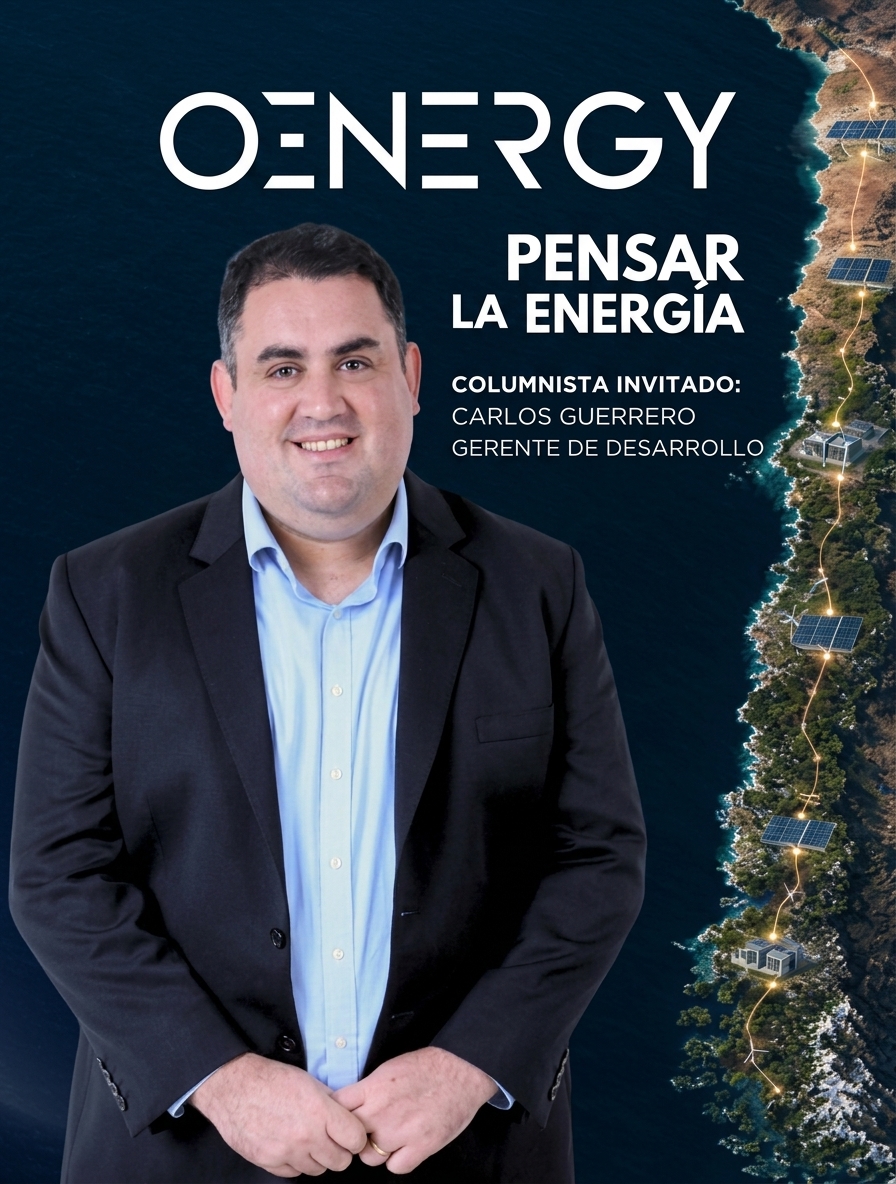
Guest columnist: Carlos Guerrero, Development Manager, oEnergy
Carbon-free mining, data centers, electromobility, and other emerging centers of consumption are reshaping the electricity demand landscape and, with it, decisions about where and how to develop new energy projects.
According to Chile’s National Energy Commission (CNE), a transmission project can take between seven and ten years from planning to commissioning. During that time, a mining operation may expand, the automotive fleet may continue its shift toward electromobility, a desalination plant may be built, and/or demand associated with data centers and artificial intelligence may change dramatically.
This time lag forces those of us developing energy projects to look beyond available resources and ask whether the infrastructure will be in place in time to capture the demand that is coming. The challenge is enormous.
During Chile’s major renewable energy expansion, one of the first questions was where the best generation conditions could be found. The north offered exceptional solar irradiation, while other areas had strong wind or hydro resources. Then came land availability and grid connection, environmental and territorial feasibility, engagement with local communities, permitting, and commercial conditions.
All of these factors remain essential. But other questions are becoming increasingly important today: Where will the sources of consumption be that can create value from this energy? Where will the optimal intersection between future demand and generation occur so that the national system can operate efficiently and securely? Will the sector be able to adapt to the pace imposed by new technologies?
It is not enough to project how much the country’s demand will grow. To develop projects effectively, it is crucial to understand where demand will grow, which activities will drive that growth, and what infrastructure will be required to meet it.
Two types of demand, two geographies
Mining illustrates this clearly. Cochilco projects that the sector’s electricity consumption will increase from 27.6 TWh in 2025 to 33.2 TWh in 2034, a 20.2% increase, while copper production is expected to grow by 8.3%. Part of this greater energy intensity is driven by structural changes, including the growing use of seawater and the energy required to desalinate and pump it, as well as the electrification of mining transportation. Trolley-assist projects and electric truck fleets are already being developed at several mining operations. Ultimately, this marks a new cycle for large-scale mining, as the industry moves beyond carbon neutrality toward an increasingly carbon-free model.
We are therefore not simply looking at an industry that will consume more electricity. Where and why it needs that electricity is also changing.
Data centers represent another expression of the same phenomenon. Chile already has approximately 166 MW of installed capacity and has established itself as one of Latin America’s leading markets³. Demand is concentrated particularly in the central region and requires continuity, reliability, and responsiveness at specific points across the grid.
These are different industries, but they raise the same question for development: What energy infrastructure makes sense to build in order to meet that demand?
The Coordinator already incorporates mining projects, desalination plants, data centers, green hydrogen, and other large sources of consumption into its future scenarios. This makes it necessary to consider resources, infrastructure, and demand together. A project may have excellent solar irradiation, suitable land, and competitive technology, yet still lose value if its location does not align with the evolution of the grid or with sources of consumption capable of making effective use of that energy.
This is why development is beginning to incorporate a different logic from the outset: What energy need are we trying to address, and what combination of generation, storage, grid infrastructure, or contractual arrangements can best respond to it.
A Challenge That Is Also Changing the Business
Developing projects based on demand is not simply about adding another variable to the model. It means reconsidering how a project is originated and evaluated.
Moving from an approach primarily centered on the asset to one that incorporates the needs of current and projected demand from the outset requires stronger connections between Development and New Business, engineering, market analysis, environmental and territorial considerations, community engagement, and commercial structures.
It also introduces new uncertainties. Projected demand may be delayed, a customer may change its investment plans, the grid may evolve differently than expected, or a disruptive technological change may alter the entire scenario.
Development is therefore increasingly becoming a matter of decision-making under uncertainty: identifying early signals, assessing different scenarios, and avoiding configurations that depend on a single bet.
The goal is not to predict what the electricity system will look like in 2040 or 2050. It is to make sufficiently robust decisions today so that a project continues to make sense when that system inevitably looks different.
From Developing Assets to Developing Solutions
Chile will continue to have extraordinary renewable resources. That competitive advantage is not going away. But we are not alone: other countries are competing for the same projects, and their energy industries are moving at an increasingly demanding pace. Having the resources is not enough; the challenge is turning them into projects in time.
The next stage will require a better understanding of where consumption will grow, what those customers will need, and how that demand can be connected to available resources and infrastructure.
This inevitably brings Development closer to the business and the customer. When the starting point is an energy need, the boundaries between developing a project and designing a solution become less rigid.
Mining, data centers, and other emerging centers of consumption will not only increase the amount of electricity Chile needs. They may also change where it makes sense to develop projects, which technologies should be combined, and what attributes a project must have to create value.
That is the logic guiding how we at oEnergy are approaching development: not simply adding capacity, but moving toward dispatchable and flexible energy solutions capable of responding more effectively to the needs of both customers and the system.
The challenge will be to anticipate that demand early enough to develop the infrastructure the country will truly need in the years ahead.
Let's talk
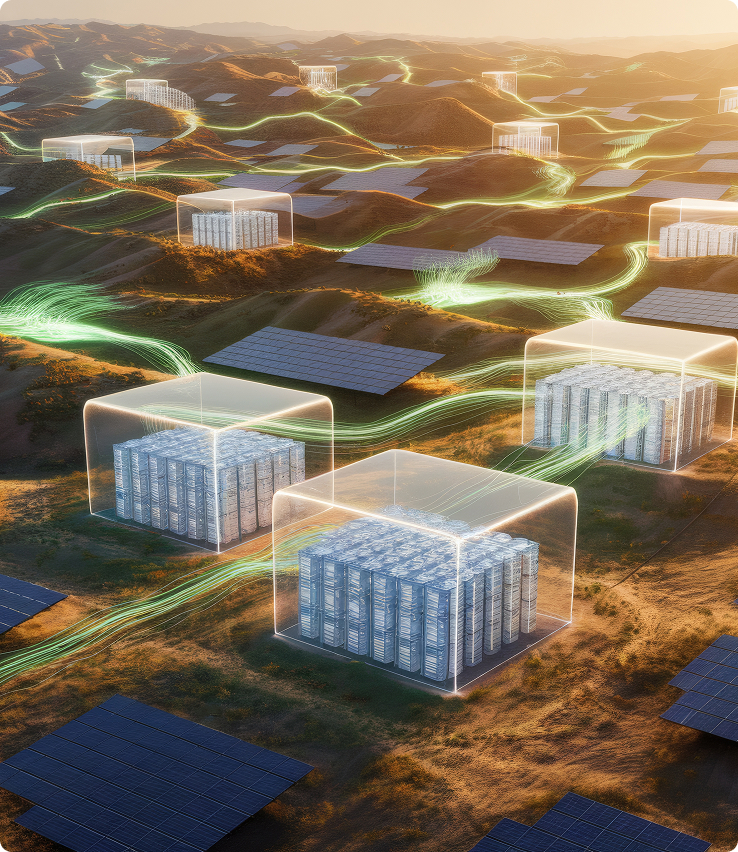
If you are evaluating supply agreements, BESS projects, or alternatives to secure reliable and manageable energy, get in touch.